Lifelike

Cradles like this were usually found in nunneries. At Christmas time, the sisters would rock the cradle as if there was a real baby in it.

A procession of figurines

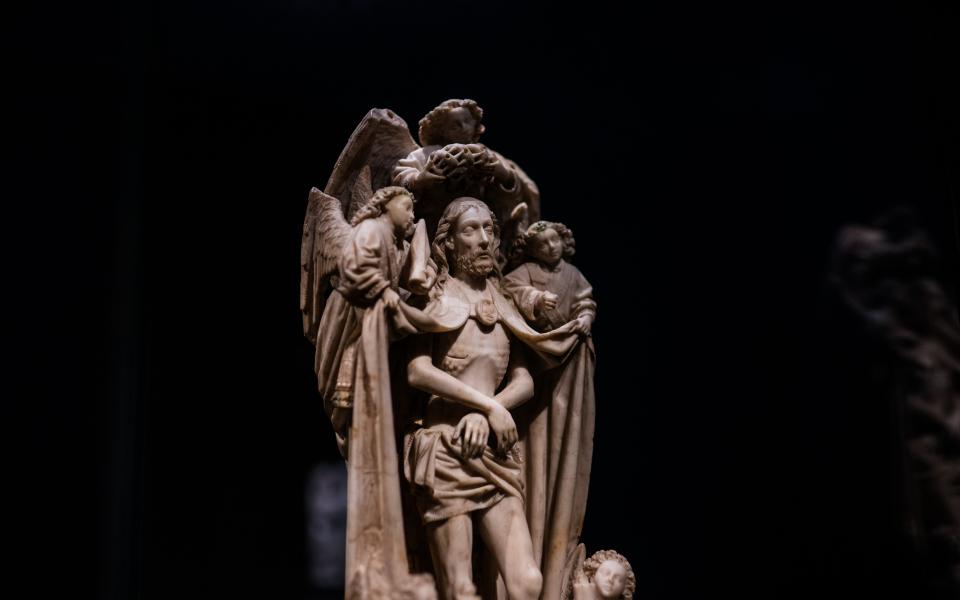
Retables with their numerous figurines are a beautiful sight. Large examples were intended to be placed on an altar or attached to the wall behind an altar. Smaller pieces like this were for private use.

Gilded elegance

This is painting and sculpture together in one beautiful work: a gilded retable in the form of an elegant tower. A very wealthy client must have commissioned it – perhaps from the circle of the dukes of Burgundy.

A lavish still life

Still lifes are a real treat. The genre flourished in 17th-century Netherlandish painting. The challenge for the painter was to make everything look truly lifelike...

Pieter’s son Pieter

Pieter’s two sons also become painters. Jan Bruegel went his own way and became a famous painter of landscapes, animals, flower arrangements, and so on. He also worked closely with and was a good friend of his fellow Antwerper Rubens. Pieter Bruegel the Younger, Jan’s older brother, mainly copied work by his father.

Copying

Certain of Pieter Bruegel’s works remained very popular for a while after his death. Among others, his elder son Pieter copied them in his studio.

The Census at Bethlehem

The Museum Mayer van den Bergh has two popular paintings by Pieter Bruegel the Elder that his son liked to – and frequently did – copy: The Census at Bethlehem is one of these.

Winter Landscape

A small snowy landscape was probably Pieter Bruegel’s most popular composition. We know of more than a hundred copies of it, many of which come from his son’s studio. The copy in the Museum Mayer van den Bergh is a beautiful example.

Press

Are you a journalist or a reviewer?

Privacy policy

The City of Antwerp attaches great importance to the protection of your privacy when processing personal data regarding the use of this website.